

I’m Joe Leo. Head of Automation at The Technology Narrative Group.
If you’re a CEO or CFO, you’ve already heard enough AI hype to last a lifetime. Every vendor has a deck. Every consultant has a “framework.” Everybody claims they can do it faster and cheaper than the next guy.
Here’s what you actually care about: risk, cash flow, and EBITDA.
If AI in IT Operations doesn’t improve one of those, you’re buying noise.
I spent 18 years at Loblaw, delivering large-scale programs and building an automation center of excellence. I’ve lived the scale problem in a low-margin environment. Now I’m bringing that mindset to mid-market companies through TNG. Same standards. Different budget. Less tolerance for nonsense.
So let’s talk about “trends for 2026.” I don’t love the word trend, because every company is different. However, there are clear themes that I expect to matter, especially for companies in the $ 20M-$100 M range whose internal tech resources are limited.
Why 2026 is going to feel different
Automation isn’t optional anymore. According to McKinsey, 75% of companies have started automating processes or plan to within a year.
That means your competitors are getting capacity without hiring. They are boosting output without increasing payroll. They’re getting speed-to-market, faster onboarding, faster reporting, faster everything.
And here’s the part that should keep you awake.
AI programs fail all the time. Not because the tools are bad. Because the foundations are messy. An S3Model analysis shows roughly 70% of AI projects fail due to data-quality or integration issues.
That’s a CFO problem. That’s wasted spend and increased risk.
Downtime is also a CFO problem. If your IT operations are shaky, your business bleeds. The same analysis shows that one hour of downtime can cost around $100,000, and about one-third of companies report losses over $1M per hour.
So when people ask me about “AI for IT operations,” I’m not thinking about cool demos. I’m thinking about stability, controls, and cost.
Speed is great. But speed is nothing without structure.

Trend 1: The “Collaborative Digital Workforce” becomes the normal operating model
By 2026, the question won’t be “Should we use digital workers?” The question will be “Why are humans still doing this work?”
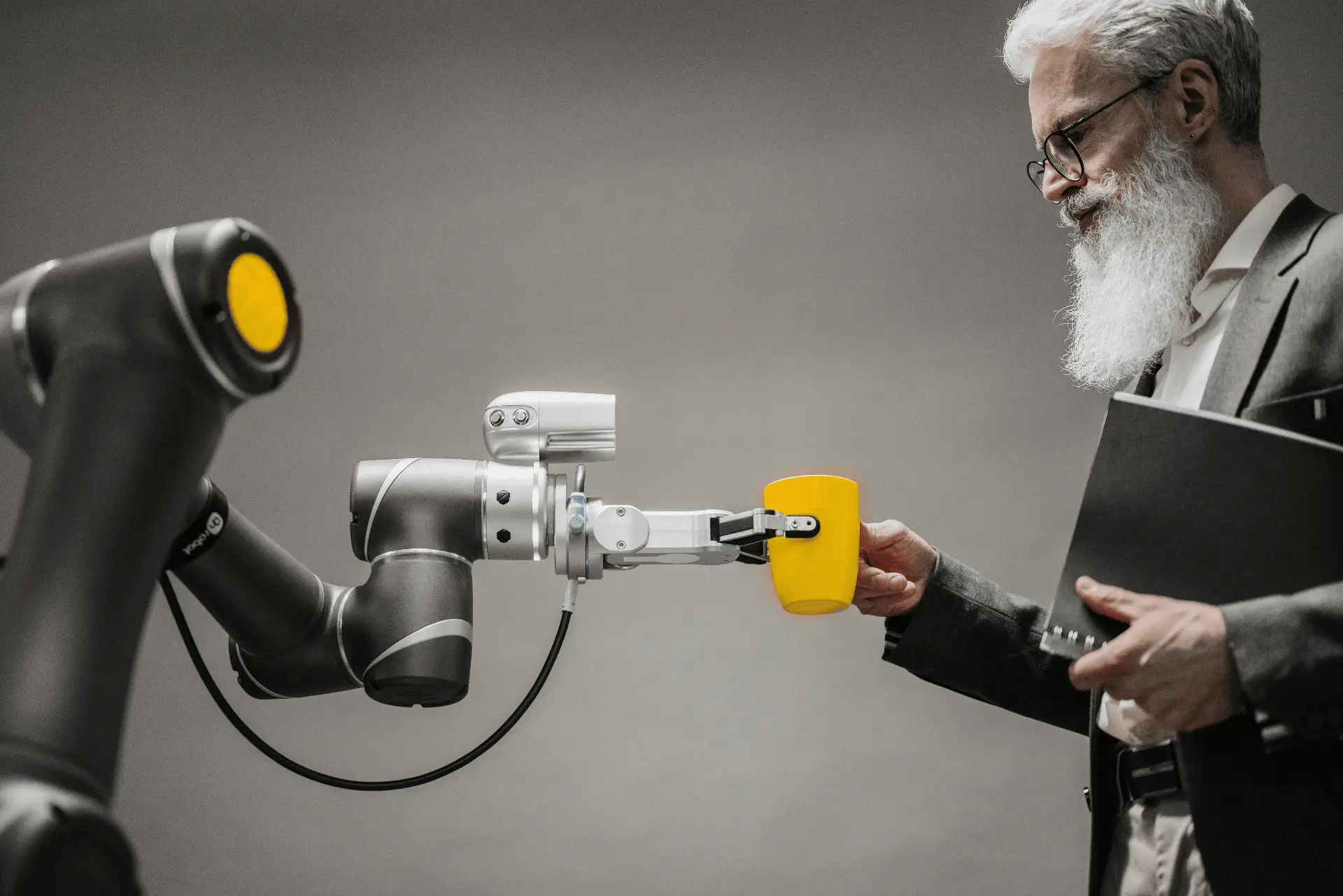
A lot of leaders still see bots through what I call Terminator Syndrome: they’re here to replace people, they’ll break things, they’ll create risk. That fear is real – but it’s also outdated. The companies getting this right aren’t building a robot takeover. They’re building a collaborative workforce: humans plus digital workers, each doing what they’re best at.
Here’s the simplest way to think about it:
Your human workforce is Michael Jordan.
Your digital workforce is Scottie Pippen.
Jordan gets the glory. Pippen makes the system work. He clears space, makes the assists, and creates the conditions for the win. That’s what bots do at scale: they don’t “get the goal.” They set the goal: removing noise, handling repetitive tasks, and letting your best people actually think.
The mindset shift that separates winners from everyone else
The wrong way to pitch automation is “getting more for less.” That framing sounds efficient, but it often fails in real life because it ignores the true cost to deliver: process messiness, exceptions, governance, security, and the operational drag of constant changes.
The companies that win treat bots like a roadmap, not a one-off project.

Trend 2: The ROI conversation shifts from dashboards to “the assist”
CFOs love metrics. I do too, when they’re real.
However, here’s the truth that most automation decks overlook: the biggest wins in IT automation rarely appear cleanly on a dashboard. They show up as second-order effects: less firefighting, cleaner data, fewer customer issues, and more capacity where it actually matters. All of which ultimately translates into lower costs and increased revenue.
The real metric CFOs care about is EBITDA. And while directly tying an individual automation use case to EBITDA can be difficult, a well-structured roadmap with clearly defined outcomes makes it far easier to connect an automation program to financial performance. The era of selling automation purely on FTE savings is over. The stronger story is this: we removed friction which stopped revenue and margin from leaking quietly.
In any large-scale operation, master data is the invisible engine that drives commerce. It defines the rules. The product codes, location permissions, and distribution logic, all of which are combined, are what allow transactions to happen. When that data is wrong, the engine stalls. Products aren’t ordered, shipments aren’t triggered, and revenue doesn’t show up. These aren’t administrative issues; they are direct hits to the bottom line.
The way leading organizations address this is by turning digital workers into force multipliers through a two-stage approach:
Intelligence filtering: Digital workers are trained to continuously scan data for specific, high-impact patterns that signal a real operational break.
Autonomous correction: Once those patterns are validated, digital workers are empowered to correct known discrepancies automatically, without waiting for human intervention.
This is the assist.
Digital workers don’t replace human judgment or strategy. They do the invisible, relentless work that keeps the system running cleanly. This empowers human teams to focus on decisions that actually drive revenue.
Trend 3: Data quality and business rules become the real moat
If you want AI to work in IT operations, you need clean inputs, clean processes, and clear rules.
For many organizations, the reality is a ‘Wild West’ of undocumented workflows and legacy data silos, often protected by the ‘how we’ve always done it’ mindset.
Poor data is more than a technical debt; it is a financial hemorrhage, which one study estimates to cost U.S. businesses a whopping $3.1 trillion per year. In the context of automation, ‘garbage in, garbage out’ is an absolute law. You cannot automate an exception you haven’t defined, and layering AI onto a chaotic foundation doesn’t fix the mess; it scales the mess at machine speed.
True transformation requires dismantling the ‘hero culture’ where manual firefighting is mistaken for value. This culture creates a fragile, high-risk environment where root causes are ignored in favor of temporary fixes. Before embarking on an AI journey, leaders must define ‘what good looks like.’ Without that blueprint, you aren’t building a future, you are planning for a collapse.”

Trend 4: Operational drag becomes digital, and you need to hunt it differently
In a physical workspace, operational drag is visible; it manifests as clutter, friction, and cross-functional tension. In IT operations, however, drag is less visible. It hides within tools and fragmented handoffs. It masquerades as ‘busy work’ like bouncing tickets and immortal spreadsheets which refuse to die. There’s also the “copy/paste” method, used to keep disparate systems aligned, resulting in costly shortcuts that avoid proper integration.
A useful signal for this friction is the ‘three-response’ rule: if a thread requires more than three interactions, the process is likely broken. This remains true even in the era of automation; a bot-generated operation does not validate a flawed workflow. Drag is waste, and waste must be eliminated before a process is automated.
By 2026, the strategic application of AI in IT Operations will move beyond bots doing work to detecting the patterns that signal process failure. The real value lies in AI agents that monitor processes to identify systemic friction and flag ‘dirty laundry’ that staff might otherwise ignore.
While employees will typically ask to automate the tasks they dislike, AI can objectively identify the processes that actually need to be reviewed. The goal isn’t just to automate work; it is to be more efficient, reduce cost and increase profit.

Trend 5: AI-driven QA and testing becomes one of the highest-ROI use cases
Most production failures aren’t caused by a lack of talent; they are caused by inconsistent testing and neglected lower environments. These staging areas often lack the rigors of production, leading to a “junk drawer” mentality where testing is frequently rushed or skipped. When things inevitably break in the live environment, the cost isn’t just a technical fix; it is a direct hit to the P&L through downtime and lost momentum.
By 2026, the competitive advantage will shift toward companies that utilize automated agents to maintain environmental integrity. These digital workers provide a level of consistency that human teams simply cannot sustain by automatically resetting and sanitizing master data for every test cycle. This ensures environment standardization before a single line of code is even run. Furthermore, these agents drive predictable execution by running identical test scenarios with 100% frequency, effectively eliminating the “skipped steps” that occur when human teams are under pressure. The final layer of value is validation at scale. Instead of a manual review of every log, digital workers audit outputs and flag only the discrepancies for human sign-off, ensuring the team stays focused strictly on true outliers.
This isn’t about replacing the “human in the loop”; it’s about elevating them. By automating the repetitive maintenance of these lower environments, IT leaders can finally move from reactive firefighting to proactive strategy.
Trend 6: AI won’t replace legacy systems, but it will buy you time
Many leaders hear “AI” and assume it’s a magic wand to finally retire their aging system and infrastructure. The reality is more nuanced. While modernization is inevitable, the current economic climate often makes a total “remove and replace” overhaul a risky, high-capital gamble.
The real problem with legacy systems isn’t just their age; it’s the operational drag they create. A master data update that takes five minutes in a modern ERP like SAP can take nearly an hour in a legacy environment due to manual entry and siloed workflows. That drag isn’t just a frustration for your team; it is a silent drain on your cash flow.
In 2026, forward-thinking mid-market companies are using digital workers to bridge this gap. Instead of a multi-year, multi-million dollar migration, they are automating the friction through eliminating manual touches, stabilizing operations and cleansing the foundational master data layer. This approach transforms the conversation from a panicked “we have to move now” to a strategic “we have time to decide.” By removing the drag, you protect your P&L today and buy the most valuable commodity, the gift of time.

Trend 7: “IT Inventory” becomes digital consumption, and it can get out of control fast
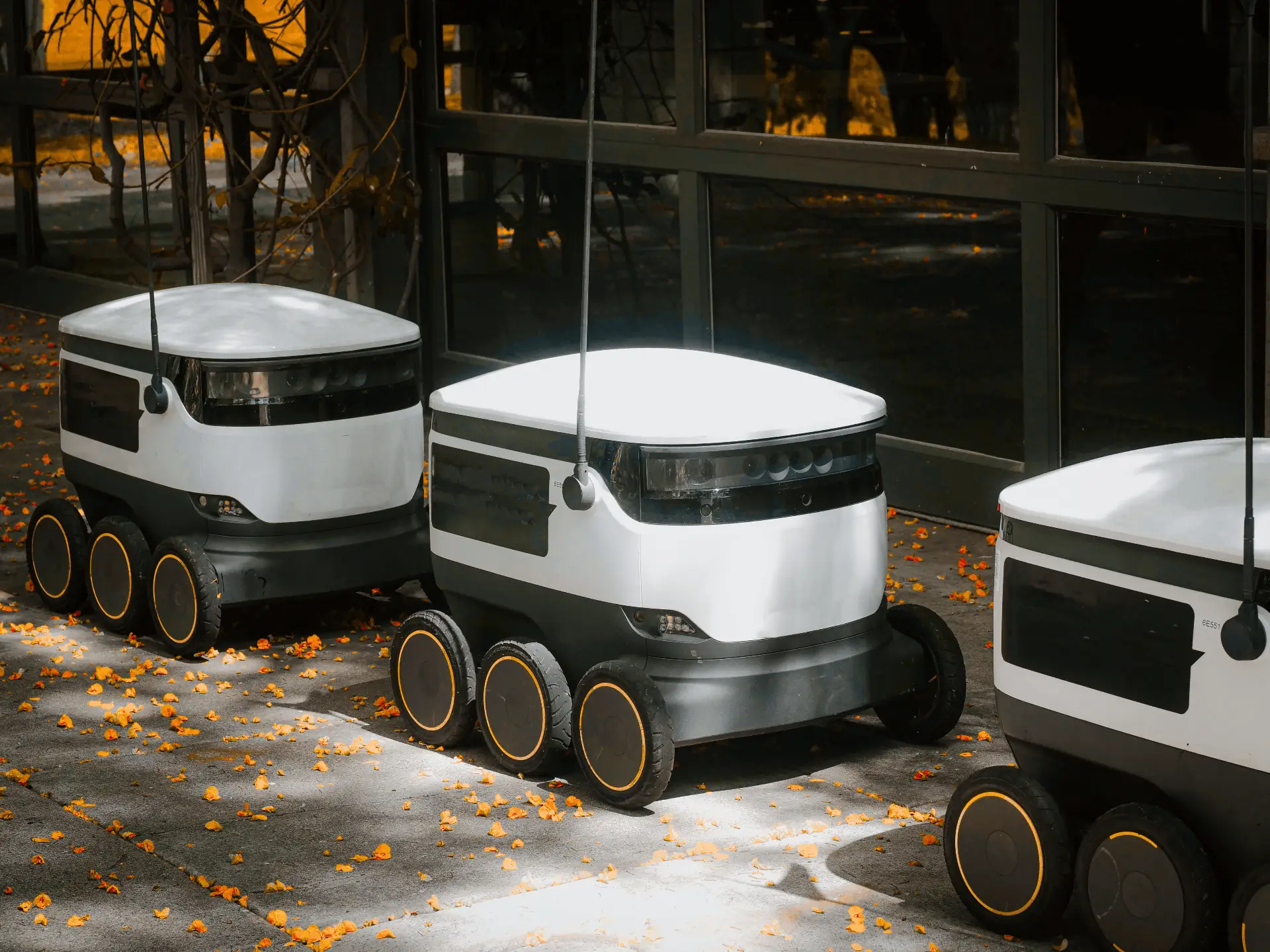
In the world of supply chain, physical inventory is often called “the devil”. It is capital tied up on a shelf, losing value every day. In modern IT, the equivalent is Digital Consumption. Cloud storage, compute usage, log retention, and AI token workloads are having a major impact on cash flow. But unlike a physical warehouse, you can’t walk through it and see the pallets stacking up. Digital inventory grows quietly in the background until the monthly invoice lands.
The scale of this challenge is staggering. Flexera’s 2025 State of the Cloud report found that 84% of organizations cite managing cloud spend as their top challenge, which is expected to grow by about 28% over the next year. If that isn’t enough for you to “sharpen your pencil”, layered on top of all this is the unknown consumption costs AI will bring with it as companies begin full adoption. Some companies are already seeing monthly AI bills in the millions, and the computing cost for AI initiatives is projected to rise by around 89% from 2023 to 2025.
If you treat AI operations as a fixed cost, you’re in for a surprise. In 2026, consumption is the bill. To maintain a healthy P&L, companies must apply the same discipline to digital consumption that they do to physical inventory.
Ironically, AI is the best tool to manage this risk. If used correctly, AI can be leveraged for Autonomous Archiving, moving “cold” data to a lower cost tier instantly. It can be used for Predictive Alerting, flagging usage anomalies before they result in a six-figure overage. The options are endless… well, as endless as your cloud storage capacity.
Without this automated discipline, your AI program won’t just solve problems; it will accelerate your burn rate faster than you can say “burn rate”.
Trend 8: Citizen development explodes, and governance decides if it helps or hurts
In 2026 the definition of a “developer” has fundamentally shifted. With the ubiquity of Copilots and low-code platforms, the power to build automation has moved from the IT department into the hands of logistics managers, accountants, and frontline leads. While this democratization offers a massive opportunity for business agility, it also creates a high-stakes governance challenge. Without a rigid framework, “anyone building anything” quickly devolves into Shadow IT, security vulnerabilities, and a fragmented landscape where ten different versions of the same application create more friction than they solve.
The true value of business-led development lies in the fact that these “citizen developers” understand the nuanced exceptions and real-world workflows that an outside consultant might miss. However, that institutional knowledge is only useful if it is deployed within a controlled environment. Scaling this capability requires a centralized orchestration team to manage infrastructure and nomenclature, alongside mandatory code reviews and security audits. There is a reason experts don’t simply hand over the “ingredients and recipes” for complex automation without the accompanying safety protocols; in an undisciplined environment, these tools can become a liability rather than an asset.
For the executive leader, the takeaway is clear: citizen development is a powerful leverage play for your P&L, but it is never a “free” efficiency gain. The success of the program depends entirely on the strength of the guardrails you put in place. You must be willing to fund the controls and the governance structure upfront. The risk to your operations and security far outweighs the speed of the build.

Trend 9: Culture and resistance stays the hardest part
Almost every executive says they want automation, but the moment it begins to scale, they hit a wall of human resistance. This is a documented phenomenon: McKinsey research has consistently shown that nearly 50% of executives identify employee resistance as a primary barrier to successful automation. Humans possess an inherent fear of being replaced or becoming obsolete, and while technology changes rapidly, that fundamental human anxiety simply changes shape rather than disappearing.
Overcoming this requires a leadership style that is both empathetic and incredibly direct. The core message must remain consistent: we are here to work smarter, not harder. Digital workers are deployed to absorb the tedious, rule-based grunt work that drains morale, allowing the human team to reclaim their time for high-value, strategic contributions. Most employees actually welcome this shift once they see the personal benefit. However, for those who fundamentally refuse to adapt, leadership must be decisive. In a high-stakes 2026 economy, holding onto a “manual-only” mindset is a luxury your P&L cannot afford.
Ultimately, any transformation program is a reflection of the leadership team’s vision and humility; AI is no exception. The most common pitfall is a “delivery-first” mindset that overlooks the insights of the people closest to the work. Success in this new era continues to belong to leaders who remain curious, stay grounded in the data, and are willing to pivot when a pilot doesn’t yield the expected results. By fostering a culture of transparency and shared wins, leaders can ensure that automation isn’t just a technical upgrade, but a foundational shift that empowers the entire organization to evolve together.

What I’d do in the next 90 days if I were you
You don’t need a 50-page AI strategy document to stay competitive in 2026. In fact, over-planning often leads to the very “operational drag” we’ve discussed. Instead, you need a clear starting point and a disciplined approach to avoid common traps. If I were stepping into your shoes today, here is the playbook I would follow for the next three months:
Phase 1: The Alignment Check (Days 1–30)
Before spending a single dollar on a new tool, ask four foundational questions. If your leadership team isn’t aligned on these, pause until you are:
1) What is the specific problem statement?
2) What does “good” look like, and how will we quantify it?
3) How much are we willing to invest to solve this?
4) What is our realistic timeline?
Without these answers, you risk chasing trends rather than ROI.
Phase 2: The Pilot & Partner Scan (Days 31–60)
Identify one high-impact, low-complexity process, like a specific master data workflow, and launch a pilot. This is also the time to evaluate your external partners. The biggest risk in 2026 isn’t just bad tech; it’s “vendor creep.” I’ve seen projects quoted balloon at 5x the original vendor quote through a dozen “small” incremental adjustments.
Watch your partners closely. A good vendor should give you an honest picture of your internal challenges, not just a “we can do that” to every request. If a partner isn’t helping you build internal capability, they are likely just embedding themselves into your overhead.
Phase 3: Review and Pivot (Days 61–90)
By day 90, you should have data from your pilot. This is the “ego-free” zone. If the pilot worked, look at how to scale it. If it didn’t meet the quantified goals from Phase 1, have the humility to pivot. At TNG, we are built specifically for this mid-market reality. Our goal is to empower your team to manage their own digital future, rather than creating a dependency that prevents you from moving fast.
Closing: Pop the hood before you scale
In 2026, the divide between companies that succeed with AI and those that struggle won’t be defined by who has the most advanced models. It will be defined by discipline. The “winners” will be the organizations that run mature, predictable programs characterized by clean data, clear operational rules, and meaningful governance.
Many organizations will attempt to skip the “boring” foundational work: the data cleansing, the process mapping, and the rigorous retrospectives. They will still deploy digital workers, but they will do so at a much higher cost. They will learn their lessons the hard way: in production, where failures are expensive.
Whether a worker is human or digital, the standard must remain the same. They must be reliable, and they must deliver a measurable outcome. If you are preparing to scale your digital workforce, I encourage you to perform a thorough “under-the-hood” check before you step on the gas.
Overstressing a fragmented system without assessing its structural integrity is a surefire way to blow up the engine. And in the world of enterprise IT, a blown engine doesn’t just result in a stalled project or a disappointing blog post; it shows up directly in your P&L.
Frequently Asked Questions
What is the financial impact of poor data quality on mid-market companies?
Beyond operational friction, bad data is a direct P&L drain. Research indicates poor data quality costs approximately $12.9 million per company annually. For AIOps to function, cleaning this ‘data debt’ is a prerequisite to avoiding garbage-in-garbage-out scenarios.
How much redundant data typically exists within IT operations?
Data redundancy is a silent budget killer in IT environments. Assessments show that 15 – 20% of an organization’s data consists of duplicate records. AIOps initiatives must use deduplication algorithms early to prevent inflated storage costs and skewed analytics.
Why is bridging the gap between IT strategy and execution difficult?
Alignment is rarely the issue. Execution is the bottleneck. Studies reveal that 90% of companies fail to fully execute their strategies. AIOps helps close this gap by automating the metrics tracking and reporting that keep strategic initiatives visible and on track.
How does AIOps differ from Robotic Process Automation (RPA)?
RPA mimics human actions, handling repetitive, rule-based tasks like data entry. AIOps mimics human reasoning, using machine learning to detect patterns and predict outages. An effective ‘digital workforce’ requires RPA for execution and AIOps for intelligence and oversight.
Can AIOps reduce cybersecurity risks in mid-market enterprises?
Yes, by shifting security from reactive to predictive. AIOps establishes baselines for normal network behavior and instantly flags anomalies. This reduces the ‘mean time to detect’ (MTTD), identifying potential breaches or data exfiltration attempts faster than manual monitoring ever could.
Learn more about AI & Intelligent Automation for Mid-Sized Companies